

Giving vocational skills, creating livelihoods for people in the highlands of Lao Cai
Lao Cai promotes vocational training associated with practical needs, helping ethnic minorities have jobs, increase income and develop sustainable livelihoods.
From vocational training to job opportunities
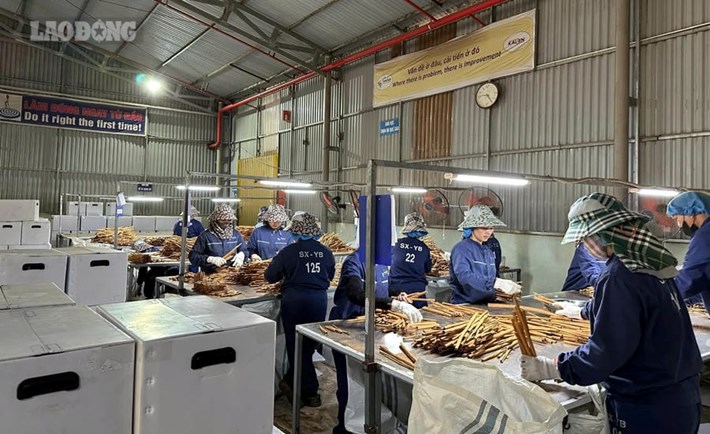
Thanks to local officials' advice and job introductions, Mr. Hoang Trong Vien (Huong Giang village, Yen Binh commune, Lao Cai) has a stable job at Yen Binh Investment and Construction Joint Stock Company, with an income of over 10 million VND/month from producing metal components. He also participates in vocational training classes in cultivation and animal husbandry to improve skills and develop the family economy.
In Yen Binh commune, with more than 18,000 people of working age, of which about 16,000 people have jobs, the work of connecting labor supply and demand is identified as an important task. The locality focuses on reviewing the job needs of people, especially unemployed workers and people who want to change careers.
Instead of waiting for people to find opportunities themselves, the commune government proactively brings recruitment information to each village and residential group through meetings, mass organization activities, broadcasting systems and appropriate information channels. Grassroots officials directly advise on occupations, recruitment conditions, income and working environment, and connect workers with businesses," shared Ms. Le Huyen Minh, specialist of the Culture and Social Department of Yen Binh commune.
Vocational training from local needs
According to the Lao Cai Department of Education and Training, many rural and mountainous workers do not have the conditions to work at enterprises, and their livelihoods mainly rely on agricultural production. Therefore, vocational training associated with technical transfer is a practical solution to help people improve productivity and income.
In Khanh Yen commune, recently, local authorities coordinated with the Van Ban Vocational Education - Continuing Education Center to organize the opening of 2 vocational training classes for rural workers with a total of 60 students.
The two professions chosen are veterinary farming and safe vegetable production. During a month, trainees are guided on professional knowledge and practical skills in animal care, disease prevention and control; choosing breeds, using fertilizers and pesticides reasonably, and applying safe vegetable production processes.
A noteworthy point is that the program does not only stop at imparting theoretical knowledge but also focuses on practice, helping students to directly apply it to production activities at home. After the course, participants are issued a primary vocational certificate.
Or in Ban Ho commune, livelihood development is also placed in relation to the potentials and advantages of the locality. Along with supporting loans and implementing social security policies, the commune focuses on maintaining agricultural production, developing medicinal plants, animal husbandry, aquaculture and tourism.
In Lao Chai commune, the area is large, the population is dispersed, and traffic in some areas is still difficult, causing certain limitations in people's access to vocational training and job opportunities. Along with the programs that have been implemented, the commune has developed a plan to open a mushroom growing technical class for 30 students in October 2026, with funding support of 70 million VND from the National Target Program to support vocational training for rural workers.
Mushroom growing is chosen to take advantage of the available area and raw materials in the locality, helping people develop livelihoods and diversify income sources.
See the original here