

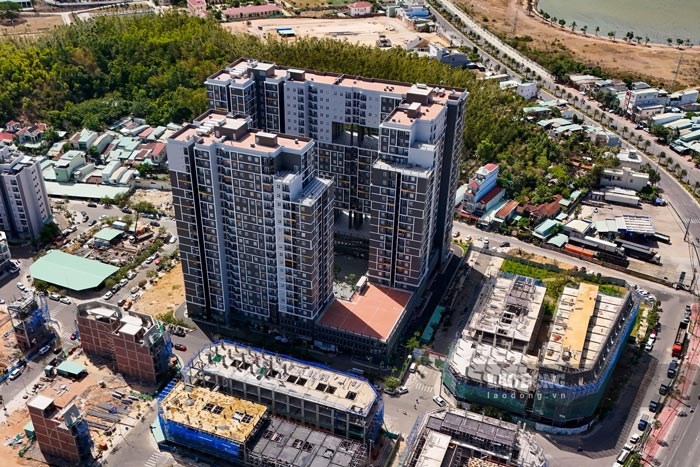
Gia Lai plans to develop more than 8,000 houses for low-income people
Gia Lai sets a target to develop more than 8,000 social housing (NƠXH) and rental housing in the 2026-2030 period, opening up more housing opportunities for workers, laborers and low-income people.
According to the plan, in the period 2026-2030, Gia Lai is expected to develop 8,041 houses, including 7,368 social housing units for sale, lease-purchase and 673 rental units. In which, in 2026, strive to complete 1,941 units; in 2027, 2028 and 2029, 1,500 units each year; in 2030 alone, complete 1,600 units.
The goal is also to solve the housing needs for low-income people, workers, laborers, armed forces and subjects entitled to housing support policies in the province.
In fact, many worker families in Gia Lai still have to rent houses and rent rooms for many years. With limited income, most of their monthly salaries must be spent on essential expenses such as food, children's education, electricity, water and travel. Therefore, hoarding to buy a house is still a difficult problem for many workers.
Ms. Tran Thi Thu Thuy (born 1985), a worker at Minh Duong Vietnam Biochemical Co., Ltd. (Quy Nhon Dong ward), said that commercial housing prices are too high compared to the income of workers. Meanwhile, with social housing, workers still have many concerns about buying conditions, selling prices, the amount to pay monthly and the ability to access loans.
We hope that the social housing policy is not only about having houses to sell, but importantly, that workers have enough ability to buy and rent those houses with their own salaries. I hope the province has policies on selling prices, rental prices, interest rates and loan terms that are more suitable for actual income, so that workers have the ability to repay debts for a long time," Ms. Thuy expressed.
Before the goal of developing more than 8,000 houses, Gia Lai Provincial People's Committee requested departments, branches and localities to prioritize resolving procedures for social housing projects according to the "green channel", "priority channel" mechanism. Notably, the time to resolve administrative procedures must be reduced by at least 50% compared to current regulations, focusing on the stages of appraisal, project approval, land allocation and construction permit issuance.
Regarding land funds, the province assigned the Department of Construction to review and propose land plots with favorable locations, ensuring synchronous technical infrastructure and social infrastructure for social housing and rental housing development. In which, focus on apartment projects for rent in urban areas, densely populated areas and areas developed in the direction of public transport.
Regarding capital sources, the Provincial People's Committee proposed that the State Bank of Vietnam Branch Area 11 direct credit institutions to guide and simplify dossiers and procedures to access the 145,000 billion VND credit package, in order to support organizations and individuals to borrow capital to develop social housing, worker housing and young people under 35 years old to buy social housing.
The province requires investors to fully disclose project information, number of apartments, selling price, rental price, purchase rental price and registration conditions. The receipt and review of dossiers must ensure the correct subjects, conditions and procedures according to regulations.
Functional agencies are required to closely monitor the activities of buying, selling, leasing, and lease-purchasing social housing; strictly handle acts of illegal brokerage, fraud and appropriation of property and manipulation of registration dossiers. Thereby, ensuring housing support policies reach the right people who have needs and are eligible to benefit.
See the original here