
Thanh Hoa Provincial Labor Federation organizes 111 legal advisory groups to support workers
Thanh Hoa - Trade union legal advisory groups have handled 426 cases, contributing to removing obstacles and stabilizing labor relations at enterprises.
According to information from the Thanh Hoa Provincial Labor Federation (LĐLĐ), as of November 20, 26, the whole province has 111 trade union legal advisory groups with 1,112 members. Among them, 24 groups were established at commune and ward trade unions and 87 groups at enterprise grassroots trade unions.
In addition, the Provincial Labor Federation also has 5 mobile legal advisory groups at the provincial level with 111 members, performing the task of supporting lower-level trade unions, especially for complex cases arising in labor relations.
To date, grassroots legal advisory groups have received 538 complaints, of which 426 cases have been handled; the remaining 112 complaints are being further resolved at the enterprise.
Consulting activities focus on issues directly related to the rights and interests of workers such as salaries, overtime regimes, meal allowances, working conditions and the implementation of policies at enterprises.
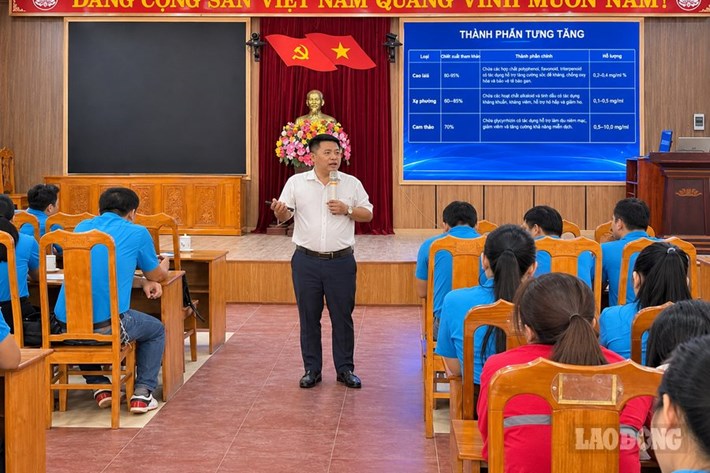
Mr. Nguyen Xuan Tuan - Head of Policy and Law and Labor Relations Department, Thanh Hoa Provincial Labor Federation - said that through regular contact with workers, consultants have the conditions to detect early problems in implementing regimes and policies or recommendations that have not been resolved by businesses.
From the information received, the trade union organization can proactively exchange with employers, guide workers to exercise their right to petition and coordinate with specialized agencies to solve arising problems.
According to Mr. Tuan, the effectiveness of counseling activities is not only reflected in the number of cases received and handled, but also in the quality of handling each case. Counselers must verify information, clearly explain legal regulations, and guide employees to take necessary steps to protect their legitimate rights.
For cases beyond authority or professional capacity, consultants need to guide transfer to responsible agencies, and at the same time continue to monitor the results of resolution.
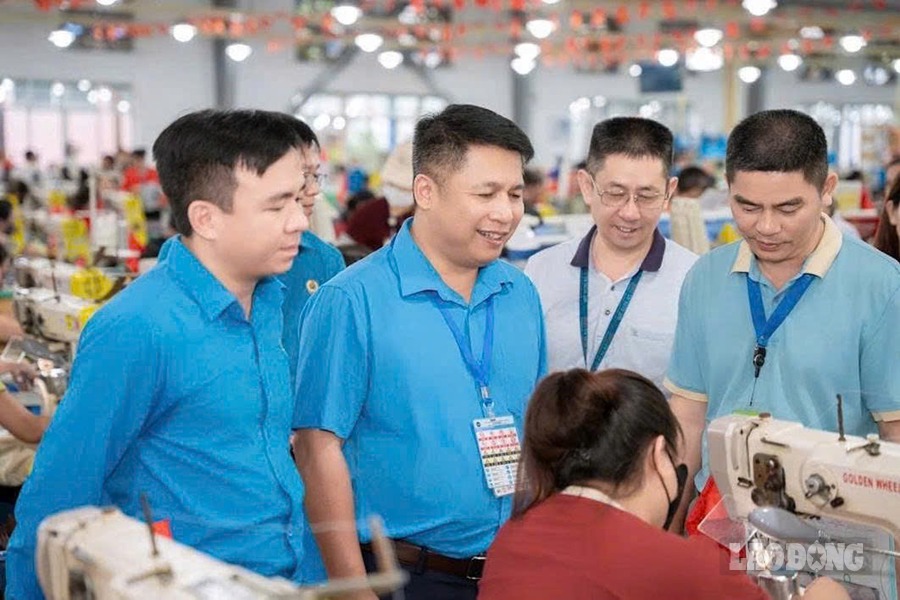
Along with consulting activities, strengthening dialogue between employees and employers has contributed to removing many recommendations related to regimes and policies at businesses in Thanh Hoa.
Typically, at Phuong Linh Trading, Service and Production Co., Ltd., through dialogue, the enterprise agreed to increase the meal allowance from 20,000 VND to 25,000 VND/person/day. Professional allowance and gasoline allowance were also adjusted to increase from 300,000 VND to 500,000 VND/person/month for each item.
At Van Loi Import-Export Garment Co., Ltd., the working conditions of workers have been improved when the enterprise equips additional air conditioners at all production workshops.
These are specific results in the process of dialogue and resolving workers' recommendations, contributing to improving income, working conditions and building labor relations at enterprises.
Notably, in the first 9 months of 2026, Thanh Hoa Trade Union has coordinated to handle 4 cases of collective work stoppages and labor disputes. Through dialogue and resolution of petitions, workers have returned to work, and production activities at enterprises have stabilized.
According to Mr. Nguyen Xuan Tuan, for a dialogue to achieve results, trade unions need to proactively grasp the situation, fully receive recommendations, check information and prepare legal bases before working with the parties.
In this process, legal consultants play a role in supporting workers to understand their rights and obligations, and at the same time help businesses identify inadequacies in policy implementation to have appropriate adjustment measures.
From practical operations, Mr. Tuan believes that consulting groups need to continue to improve the quality of staff, especially the skills of listening, searching for laws, explaining policies and protecting information of employees.
At the same time, each advisory group needs to have a clear contact point, specific processes for receiving and monitoring cases. Operating efficiency needs to be assessed based on the quality of advice, processing time and results of resolving petitions, instead of just relying on the number of propaganda sessions or attendees.
See the original here